
Alphabetical search! Use your back button to return.
| |||||||||||||||||
~Gunnia Lindley - See Sarcochilus R. Brown SUBFAMILY Epidendroideae, TRIBE Vandeae, SUBTRIBE Sarcanthinae .
This genus has been thrown out and all it's species were moved to Sarcochilus.
~Gyas Salisbury - See Bletia Ruiz & Pavon SUBFAMILY Epidendroideae, TRIBE Arethuseae, SUBTRIBE Bletinae.
Gymnadenia R. Br. SUBFAMILY Orchidoideae, TRIBE Orchideae, SUBTRIBE Habenariinae . There are 15 species that are allied to Habenaria.
A cool to intermediate growing terrestrial orchid found in all of Europe that blooms from mid spring through mid summer.
~Gymnadenia nivea Nutt. - See Platanthera nivea[Nutt.]Lindley
Found in all of Europe as a cool growing terrestrial orchid that blooms in the spring and summer.
~Gymnadenia pyrenaica Giraudias - See Gymnadenia conopsea (Linne) R. Brown
~*Gymnadenia rubra Wettstein - See Nigritella rubra (Wettstein) K. Richter
~Gymnadenia suaveolens Rchb.f - See Gymnadenia odoratissima (Linne) L.C.M. Richard
~Gymnadenia viridis L.C.Rich. - See Coeloglossum viride [L.]Hartm.
~Gymnadeniopsis Rydb. - See Habenaria Willd.
~Gymnadeniopsis nivea Rybd.- See Platanthera nivea [Nutt.]Lindley
Habenaria Willd. SUBFAMILY Orchidoideae, TRIBE Orchideae, SUBTRIBE Orchidinae. There are over 500 species of Habenaria spread throughout the temperate and tropical grasslands. The greatest concentrations of species is in tropical South America, Asia and Africa. They are decidious and die down after the flowering process leaving a fleshy tuber beneath the ground. When the plant is dormant it needs little to no water but as the new shoot appears it is time to water and keep wet til after flowering has occured.
~Habenaria blephariglottis Lindley - See Patanthera blephariglottis [Willd.]Hkr.f
~Habenaria ciliaris R.Br. - See Platanthera ciliaris [L.]Lindley
~Habenaria conopsea Franc. - See Gymnadenia conopsea [R. Br.]R. Br.
What a gorgeous flower!
~Habenaria gymnadenia Druce - See Gymnadenia conopsea (Linne) R. Brown
~Habenaria maculosa Lindley - See H. monorrhiza [Sw.] Rchb.f
~Habenaria militaris Rchb.f - See H. rhodocheila Hance
An epiphyte from Central America to Colombia and Peru and the West Indies that is found at altitudes of 1500 meters. It is a common terrestrial in low weedy ground, wet meadows, and thickets on wooded hillsides .
~Habenaria nivea Lindley - See Platanthera nivea [Nutt.] Lindley
~Habenaria orbiculata Torr. - See Platanthera orbiculata [Pursh]Lindley
~Habenaria pusila Rchb.f - See H. rhodocheila Hance
This is a lithophyte growing on mossy rocks that blooms in the late sumer and fall and is an intermediate to warm growing plant from South China and Vietnam.
~Habenaria viridis R. Br. - See Coeloglossum viride [L.]Hartm.
~Habenaria xanthocheila Ridley - See H. rhodocheila Hance
~Habenella Small - See Habenaria Willd. SUBFAMILY Orchidoideae, TRIBE Orchideae, SUBTRIBE Orchidinae.
Haemaria Lindley SUBFAMILY Spiranthoideae, TRIBE Erythrodeae
~Haemaria discolor [Ker-Gawl.]Lindley - See Ludisia discolor [Ker-Gawl.]A. Rich
~Haematorchis Bl. - See Erythrorchis Bl. SUBFAMILY Epidendroideae, TRIBE Vanilleae, SUBTRIBE Vanillinae
Hammarbya O. Ktze. SUBFAMILY Orchidoideae, TRIBE Orchideae, SUBTRIBE Orchidinae
Found in most all of Europe except Iberia and Greece as an intermediate to cool growing terrestrial orchid that blooms in the summer.
Haraella Kudo SUBFAMILY Epidendroideae, TRIBE Vandeae, SUBTRIBE Sarcanthinae. This genus is comprised of 2 species of small epiphytic herbs that need moderate shade, plenty of water while the root tips are alive and less as they go dormant. The plants will do best if mounted in a wood slat basket and given high humidity and good air circulation.
A small epiphytic plant from Taiwan.
A Taiwanese epiphytic species.
~Hartwegia Lindley - See Nageliella L. O. Wms. SUBFAMILY Epidendroideae, TRIBE Epidendreae, SUBTRIBE Laeliinae. This genus is comprised of 2 species of small epiphytic herbs that need moderate shade, plenty of water while the root tips are alive and less as they go dormant. The plants will do best if mounted in a wood slat basket and given high humidity and good air circulation.
~Hartwegia comosa Lindley ex Pfitz. - See Nageliella purpurea [Lindley]L.O.Wms.
~Hartwegia purpurea Lindley - See Nageliella purpurea [Lindley]L.O.Wms.
Helcia Lindley SUBFAMILY Epidendroideae, TRIBE Oncidieae. This is a monotypic genus confined to Colombia and Ecuador that is related to Trichopilia.
This species is from Ecuador and Colombia and is a medium sized epiphyte that needs cool night temperatures, summer shade, high humidity and ample water while growing and a 3 to 4 week rest after blooming to enable the new growth to mature. The medium sized plant has 3" ovoid, elongated, psuedobulbs that are tightly packed on a rhizome. They have a single, elongated, elliptic, coriaceous , 4" to 8", leaf that has an undulate margin. The many fragrant long lasting single flowered basal inflorescence apperar simultaneously in the winter.
~Helleborine Hill Britt. - See Epipactis Sw. SUBFAMILY Orchidoideae, TRIBE Orchidieae, SUBTRIBE Orchidinae
~Helleborine atropurpurea (Rafinesque) Schinz & Thellung - See Epipactis atrorubens (Hoffmann ex Bernhardi) Besser
~Helleborine palustris (Linne) Crantz - See Epipactis palustris (Linne) Crantz
~ Helleborine purpurata (Smith) Druce - See Epipactis purpurata G.E. Smith
~Hemihabenaria Finet - See Habenaria Willd. SUBFAMILY Orchidoideae, TRIBE Orchideae, SUBTRIBE Orchidinae.
~Hemiperis Cordem. - See Habenaria Willd. SUBFAMILY Orchidoideae, TRIBE Orchideae, SUBTRIBE Orchidinae.
Herminium R. Br. SUBFAMILY Orchidoideae, TRIBE Orchideae, SUBTRIBE Orchidinae.
~Herminium alpinum [L.]Lindley - See Chamorchis alpina (Linne) L.C.M. Richard
~ Herminium clandestinum Gren. & Godr. - See Herminium monorchis (Linne) R. Brown
Found in all of Europe except Iberia as an intermediate to cool growing terrestrial orchid that blooms in the spring.
~Henosis Hkr.f - See Bulbophylum Thouars SUBFAMILY Epidendroideae, TRIBE Dendrobieae, SUBTRIBE Bulbophyllinae.
~Heterotaxis Lindley - See Maxillaria Ruiz & Pavon SUBFAMILY Epidendroideae, TRIBE Maxillarieae, SUBTRIBE Maxillarinae. This genus has been superceded by Maxillaria Ruiz & Pavon.
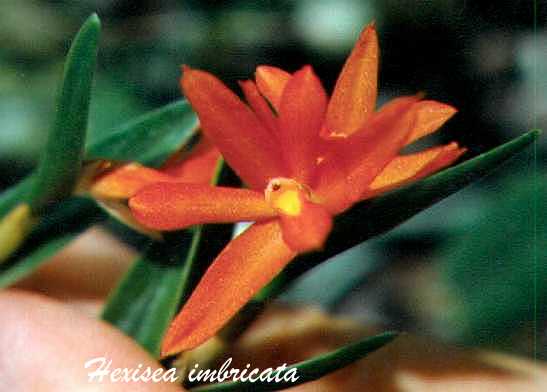
Hexisea Lindley SUBFAMILY Epidendroideae, TRIBE Epidendreae, SUBTRIBE Laeliinae. There are 6 species of this lithophytic and epiphytic, intermediate to warm genus from Central America and Northern South America that can be treated culturally like the Cattleya alliance, although they do not need a decided rest period after blooming.
~Hexisea bidentata Lindley - See H. imbricata Rchb.f
This is a Mexican epiphytic species that comes from near sea level and up to 1500 meters, in Jalaisco, near Pto. Vallarta as well as south to northern South America. In contrast to Hexisea bidentata which comes from much higher up in Chiapas.
~Hexisea oppositifolia Rchb.f - See H. bidentata Lindley
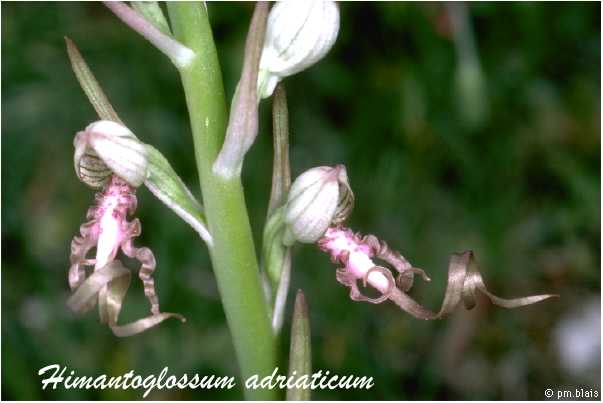
Himantoglossum Koch SUBFAMILY Orchidoideae, TRIBE Orchideae, SUBTRIBE Orchidinae. There are 5 species found as terrestrials thoughout the Mediteranean coastal ares of Europe, Middle East and Northern Africa
Found in Europe as a cool growing terrestrial that blooms in the spring and early summer.
A European native commonly called the Lizard Tongue Orchid is also found in Turkey and NW Africa as a terrestrial in calcareous soil up to 3800 feet that blooms in late spring and early summer.
~ Himantoglossum longibracteum (Bivona) Schlechter - See Barlia robertiana (Loiseleur) W. Greuter
Hispaniella Braem SUBFAMILY Epidendroideae, TRIBE Oncidieae.
This is a monotypic minature epiphyte from Haiti and the Dominican Republic that is found in dry brush and cacti in dry areas.
~Hoehneela Ruschi - See Chaubardia Rchb.f SUBFAMILY Epidendroideae , TRIBE Maxillarieae, SUBTRIBE Zygopetalinae.
Hofmeisterella Rchb.f SUBFAMILY Epidendroideae , TRIBE Oncidieae This is a monotypic genus from Colombia, Ecuador and Peru.
An epiphyte from Colombia or Peru and is a small stemless plant with linear, fleshy, equitant foliage and culture is similar to Orinthocephalus.
Holcoglossum Schlecter SUBFAMILY Epidendroideae, TRIBE Vandeae, SUBTRIBE Sarcanthinae
~Holcoglossum falcatum [Thunb.]Garay - See Neofinetia falcata [Thunb.]H.H.Hu
~Hologyne Pfitz. - See Coelogyne Lindley SUBFAMILY Epidendroideae, TRIBE Dendrobieae, SUBTRIBE Coelogyninae
Homalopetalum Rolfe SUBFAMILY Epidendroideae, TRIBE Epidenreae, SUBTRIBE Laeliinae A genus of 8 species spread through out Central America, Jamaica and Northern South America.
This intermediate to warm growing species is found from Mexico to Ecuador on trees and rocks in forests at elevetions of 800-1500 meters and blooms in the spring.
~Humboldtia Ruiz & Pavon - See Stelis Swartz or Pleurothallis R. Brown SUBFAMILY Epidendroideae , TRIBE Epidendreae, SUBTRIBE Pleurothallidinae.
~Humboldtia contorta Ruiz & Pavon - See Restrepia contorta (Ruiz & Pav.) Luer
~Humboldtia endotrachys [Rchb.]O. Ktze. - See Pleurothallis endotrachys Rchb.f
Huntleya Lindley SUBFAMILY Epidendroideae, TRIBE Maxillarieae, SUBTRIBE Zygopetalinae. There are 10 species spread from Costa Rica south to Bolivia as well as Trinidad. The genus was first described by John Lindley in 1837 using Huntleya meleagris as the type species. This genus is recognized because of it's lack of psuedobulbs, foliaceous,distichous sheathes forming a fanlike plant with narrow lightly veined leaves that give rise to a single flowered inflorescence from the base of the leaf axil. The flower has a large ribbed callus with hairlike spines at the top of each rib that has 4 flattened pollina on a short stipe connected to a flattened viscidium. They are epiphytic plants found in extremely wet cloud forests at 500-1200 meters. Intermediate wet, yet airy, conditions with ample shade apply for this genus and basket or tree fern culture seems to work best to accomodate the creeping habit of the rhizome.
An Andean species found at altitudes of 1500-2400 meters as an epiphyte.
Hyalosema [Schlecter] Rolfe SUBFAMILY Epidendroideae, TRIBE Dendrobieae, SUBTRIBE Bulbophyllinae. The largest genus of orchids with over 1200 species it is also the most geographically diverse. It is found in all tropical areas on earth and is quite diverse in its flower morphology as well. The flowers have the foot of the column which is hinged attached to the labellum so the flower has a moving part which bobs, weaves, jiggles or jumps in the slightest breeze. They are sympodial psuedobulbs with one - two leaves, closely or far spaced on the rhizome. Most bulbos like wooden slat baskets with some treefern and sphagnum as potting media.
A warm growing epiphyte found in Sumatra, the Celebes, the Moluccas, and New Guinea that blooms in the fall. This species is also known as Bulbophyllum grandiflorum Bl.
~Hypodema Rchb.f - See Cypripedium L. SUBFAMILY Cypripedioideae
~Hypodematium A. Rich - See Eulophia R. Brown & Lindley SUBFAMILY Epidendroideae, TRIBE Cymbidieae, SUBTRIBE Cyrtopodinae.
~Iantha Hkr. - See Ionopsis H.B.K. SUBFAMILY Epidendroideae, TRIBE Oncidieae. Ten species of this minature epiphytic genus exist in Florida to Mexico and south through Bolivia and Paraguay. The genus was first described in 1815 by Humboldt, Bonpland and Kunth using Ionopsis puchella as the type species. this genus has unifoliate psuedobulbs accompanied by thick leaflike sheaths where the inflorescence arises from the axils and they have flat to terete leaves. The flowers are subtended by small bracts with united sepals at the base to form a squat tube. The lip does not surround the column which has a foot and the 2 hard pollina are attached to a stipe which in turn is attached to the viscidium. They are epiphytes that are found from sea level up to 800 meters. They like to be mounted on wood and need regular water and fertilizer all year with no rest.
~Iantha pallidiflora Hkr. - Ionopsis utricularioides [Sw.]Lindley
~Inopsis Steud. - See Ionopsis H.B.K. SUBFAMILY Epidendroideae, TRIBE Oncidieae.
Ione LindleySUBFAMILY Epidendroideae, TRIBE Dendrobieae, SUBTRIBE Bulbophyllinae. Seventeen some species make up this epiphytic intermediate to warm growing genus from Asia that is related to Bulbophylum.
This species is from India and is grown intermediate to cool, shady, regular year round watering and is best grown mounted on tree fern.
Ionopsis H.B.K. SUBFAMILY Epidendroideae, TRIBE Oncidieae. Ten species of this minature epiphytic genus exist in Florida to Mexico and south through Bolivia and Paraguay. The genus was first described in 1815 by Humboldt, Bonpland and Kunth using Ionopsis puchella as the type species. this genus has unifoliate psuedobulbs accompanied by thick leaflike sheaths where the inflorescence arises from the axils and they have flat to terete leaves. The flowers are subtended by small bracts with united sepals at the base to form a squat tube. The lip does not surround the column which has a foot and the 2 hard pollina are attached to a stipe which in turn is attached to the viscidium. They are epiphytes that are found from sea level up to 800 meters. They like to be mounted on wood and need regular water and fertilizer all year with no rest.
~Ionopsis pallisiflora Lindley - See Ionopsis utriculariodes [Sw.]Lindley
~Ionopsis tenera Lindley - See Ionopsis utriculariodes [Sw.]Lindley
I collected this plant in Jamaica but they are widespread in the American tropics and subtropics even being found rarely in Florida, it blooms in the spring and summer, is an intermediate to warm grower found at altitudes up to 1100 meters as an epiphyte in humid forests and citrus groves. It is a small plant with ellipsoid compressed 1/2" psuedobulbs that bear a single apical leaf and 2 to 3, 6" linear or lanceolate, carinate, stiff and imbricate leaves that surround and enfold the rhizome and, a basal, erect, long, branching inflorescence that has numerous flowers that open in succession over months. The color of the flowers ranges from white to pink, lavender to purple and are quite a site in full bloom.
~Ionopsis zonalis Lindley & Paxt. - See Ionopsis utriculariodes [Sw.]Lindley
~Iridorchis Blume - See Cymbidium Swartz SUBFAMILY Epidendroideae, TRIBE Cymbidieae. SUBTRIBE Cyrtopodinae
~Iridorchis gigantea [Lindley]Blume - Cymbidium iridiodes D. Don
~Isochilos Sprengl. - See Isochilus R. Br SUBFAMILY Epidendroideae, TRIBE Arethuseae. SUBTRIBE Sobrliinae
Isochilus R. Brown SUBFAMILY Epidendroideae, TRIBE Arethuseae. SUBTRIBE Sobrliinae This genus of two species is found from Mid Central America to the north to Mid South America to the south and the Caribbean to the east and can be found growing as an epiphyte, lithophyte or terrestrial creeping herb that can become dense mats. They have long stems with soft flat, sub coriaceous, distichous, linear, leaves on the upper two thirds and a terminal inflorescence with one to many flowers. They require humid shady well watered conditions with a well drained pot with tree fern and aliflor.
~Isochilus chiriquensis Schlecter - See Isochilius major Cham.& Schltdl.
~Isochilus latibracteatus A. Rich - See Isochilius major Cham.& Schltdl.
This is an intermediate plant from Jamaica, Costa Rica, Guatemala, and Honduras and is found on trees in damp mixed forests at an elevation of 1400-1900 meters and blooms throughout the year.
Isotria Raf. SUBFAMILY Epidendroideae, TRIBE Vanilleae. SUBTRIBE Pogoniinae Two species make up this odd American terrestrial genus with a whorl of leaves and a solitary flower which appears in the spring and summer, it is related to Pogonia Juss. and Cleistes L.C. Rich ex Lindley
This species is found in the eastern United States and is a cool growing terrestrial from moist sandy pinewoods or on mixed hardwood slopes and along forested stream banks. It's flowering season is in the early spring.
~Jensoa Raf. - See Cymbidium Swartz SUBFAMILY Epidendroideae, TRIBE Cymbidieae. SUBTRIBE Cyrtopodinae
~Jimenesia Raf. - See Bletia Ruiz & Pavon SUBFAMILY Epidendroideae, TRIBE Arethuseae, SUBTRIBE Bletinae.
~Jonorchis G. Beck - See Limodorum Sw. SUBFAMILY Orchidoideae, TRIBE Orchideae, SUBTRIBE Orchidinae.
~Jonorchis abortiva Beck - See Limodorum abortivum (Linne) Swartz
Jumellea Schlecter SUBFAMILY Epidendroideae, TRIBE Vandeae, SUBTRIBE Angraecinae. This genus is made up of 40 epiphytic or lithophytic or occasionally terrestrial species from the Islands of Madagascar, Comoros and Mascarene and two species from the East African mainland that are similar culturally to Angraecum. In Victorian times the leaves of Jumellea fragrans were used to brew a tea like beverage called 'Faham Tea'.
Kalimpongia Pradhan SUBFAMILY Epidendroideae , TRIBE , SUBTRIBE, This is a newly discovered genus that is monotypic and comes from India.
This is a newly discovered [1976] species that comes from India at elevations of 1700-2000 meters and is a cool to intermediate grower. The psuedobulbs are small and smooth and round and the inflorescence arises from the base and the flowers have a slightly musky smell and 4 pollina.
~Katherinea A. D. Hawkes - See Epigeneium Gagnep. SUBFAMILY Epidendroideae, TRIBE Dendrobieae, SUBTRIBE Dendrobiinae.
~Katherinea ampla A.D. Hawkes - See Epigenieum amplum [Lindley]Summerh.
~Katherinea cymbidioides A.D.Hawkes - See Epigenieum cymbidioides [Bl]Summerh.
Kefersteinia Rchb.f SUBFAMILY Epidendroideae , TRIBE Maxillarieae, SUBTRIBE Zygopetaliinae Separated from Chondrorhyncha
This is an Ecuadorian species found at elevations of 1700-2000 meters.
A species from Ecuador and Peru at an altitude of 1100-1400 meters.
Kingidium P.F.Hunt SUBFAMILY Epidendroideae, TRIBE Vandeae, SUBTRIBE Sarcanthinae. This genus is composed of 5 species found throughout tropical Asia and are very similar to Phalenopsis in culture and in appearance. They differ from Phalenopsis by having a sacate lip and they need to stay wetter in cultivation as they cannot store much as they have no psuedobulbs. There are leafless varieties of Kingidium and these must be slab mounted as to allow the phytosynthetic roots to get sun. This genus likes intermediate light and regular year round water and fertilizer. The genus was described by Hunt in 1970 as it was formerly known as Kingiella.
A mini Phalenopsis type plant, grows well mounted on cork or tree fern, intermediate to warm grower that blooms at any time and more than once a year if well grown.
~Kingiella Rolfe- See Kingidium P.F.HuntSUBFAMILY Epidendroideae, TRIBE Vandeae, SUBTRIBE Sarcanthinae.
~Kingiella decumbens [Griff]Rolfe - See Kingidium decumbens [Griff.]P.F. Hunt
~Kochiophyton Schlecter - See Acacalis LindleySUBFAMILY Epidendroideae, TRIBE Maxillarieae, SUBTRIBE Zygopetalinae.
~Kochiophyton coerulens Hoehne - See Acacalis cyanea Lindley
~Kochiophyton negrense Schlecter - See Acacalis cyanea Lindley
~Kraenzlinella O. Ktze. - See Pleurothallis R. Brown SUBFAMILY Epidendroideae, TRIBE Maxillarieae, SUBTRIBE Zygopetalinae.
~Kraenzlinella platyrachis [Rolfe]Rolfe - See Pleruothallis endotrachys Rchb.f
Laelia LindleySUBFAMILY Epidendroideae, TRIBE Epidendreae, SUBTRIBE Laeliinae. Laelia was first described by John Lindley in 1831 and Schlechter revised it in 1917 by dividing the genus to 7 subsections. 1. Cattleyodes- the species that resemble Cattleya yet have 8 pollina such as Laelia purpurata. 2.Hadrolaelia- Have lips with distinctive crests and keels as well as heteroblastic psuedobulbs such as Laelia pumila. 3.Laelia- has homoblastic psuedobulbs such as Laelia speciosa. 4. Microlaelia- same as section 3 except for sepals and petals are of equal size such as Laelia lundii. 5. Cyrtolaelia- they are rupicolious or rock growing and have a narrow lip and the flower color is most often yellow to orange red such as Laelia cinnabarina. 6.Podolaelia- has sheaths and an articulated stem such as Laelia anceps. 7. Calolaelia- has a single species, Laelia superbiens, which has now been moved to Schomburgkia.
~Laelia acuminata Lindley - See L. rubescens Lindley
This is an intermediate to warm growing species from Mexico and Honduras and is found from altitudes of 500-1500 meters as an epiphyte in tall scattered oaks in pastures and coffee plantations, it is an autumn blooming plant that needs a dry winter rest.
This variety is the same as the type.
Found as a lithophyte under bushes at 1000-1300 meters to the Northeast of Minas Gerais in Brazil. They have hot summers and cold winter nights which are typically dry, but there is daily dew in the winter so light misting through the winter is required. Pot with a rocky base media such as solite or aliflor and add a little crushed tree fern then grow in an intermediate to cool environment with indirect bright light.
This particular clone came from the Volcano, Popocateptl at about 2300 meters in elevation.
This one is from the state of Michoacan, 1900 m elevation, very fragrant!
A Mexican epiphytic species that grows cool to intermediate and is found in montane oak forests or lithophytically on volcanic rocks at elevations of 1500-2200 meters and has club-shaped psuedobulbs that have two dark green leaves with pointed ends, and an inflorescence that arises from the apex of a partially developed psuedobulb. They have fragrant flowers in the winter if given good light and a dry winter rest.
This species is from Mexico and may now be called Laelia crawshayana Rchb.f., according to Miguel Angel Soto in Mexico City, it is similar to autumnalis but blooms in Late January and February. It comes only from the state of Jalisco, East of Puerto Vallarta.
~Laelia barkeriana Knowles & Westc. - See Laelia anceps Lindley
~Laelia boothiana Rchb.f - See Laelia lobata [Lindley]Veitch
~Laelia casperiana Rchb.f - See Laelia purpurata Lindley & Paxt.
A Brazilian species that is an intermediate to warm growing plant that blooms in the summer.
Found in the Brazilian state of Minas Gerais it is a lithophyte found under dense scrub bushes on cliff ledges at an elevation of 400-800 meters. Well drained pots in an intermediate environment and bright indirect light combined with a dry winter rest will make this an easy summer to fall bloomer once established.
~Laelia digbyana [Lindley]Benth. - See Rhynchlaelia digbyana [Lindley]Schlecter
it blooms only in summer and early fall. Plants are smaller than Laelia autumnalis and it comes only from the Mexican west coast north of Oaxaca state into Nayarit.
~Laelia glauca Bth. - See Rhyncholaelia glauca [Lindley]Schlecter
~Laelia gouldiana Rchb.f - See L. autumnalis, considered a color variation.
Found in the state of Minas Gerais in the Serra do Cipo' as a lithophyte under stunted bushes. Fairly bright light is needed along with a cool to intermediate environment, Pot with a coarse mixture and water while growing and give a drier winter.
~Laelia grandis Lindley & Paxton var tenebrosa Gower - See L. Tenebrosa Rolfe
~Laelia humboldtii [Rchb.f]L.O.Wms. - See Schomburgkia humboldtii [Rchb.f]Rchb.f
Found in the shady forests of Espirito Santos, Brazil at an elevation of 600 meters as an epiphyte. It requires an intermediate to cool environment with partial shade and regular spring and summer waterings and less in the winter.
~Laelia lindenii Lindley - See Cattleyopsis lindenii [Lindley] Cogn.
A Brazilian intermediate to warm growing epiphytic orchid that blooms in the spring and early summer.
Found in the mountains of Minas Gerais in Brazil at an elevation of 1400-1700 meters as a lithophyte on fully exposed rocky outcroppings. It needs a definite 6 month winter rest with only occasional mistings, bright light and water only while growing.
A Brazilian species found at an altitude of 1000 meters.
~Laelia peduncularis Lindley - See L. rubescens Lindley
A Brazilian intermediate to warm growing epiphytic orchid that blooms in the autumn and winter.
Another Brazilian intermediate to warm growing species that blooms in the fall.
An intermediate plant from Brazil that blooms in the winter and needs a dry winter rest and moderate year round light.
This is a light pink variety
A beautiful minature plant from Brazil. Blooms in the late spring.
~Laelia riveri Carr. - See Laelia lobata [Lindley]Veitch
A Central American warm to intermediate growing epiphyte of dry areas and wooded regions at an elevation of 1200-1700 meters on exposed tree trunks where they withstand full sun for hours, yet get plenty of air movement to cool down. They are distinguished from other Laelia by their compessed wrinkled psuedobulbs with a leathery apical leaf and they flower in the autumn and winter on a new growth.
~Laelia rupestris Lindley - See L. crispata [Thunb.]Garay
Found in Brazil this species blooms from June til August and grows as an intermediate epiphyte.
~Laelia tereticaulis Hoehne - See L. crispata [Thunb.]Garay
~Laelia thomsoniana [Rchb.f]L.O.Wms. - See Myrmecophilia brysiana var. minor [Hooker] H.G.Jones
~Laelia tibicinis [Batem. ex Lindley] L.O.Wms. - See Myrmecophilia tibicinis [Bateman]Rolfe
~Laelia undulata [Lindley] L. O. Wms. - Schomburgkia undulata Lindley
~Laelia virens Lindley - See L. xanthina Lindley
~Laelia violacea Rchb.f - See L. rubescens Lindley
~Laelia wetmorei Ruschi - See L. xanthina Lindley
~Laelia wyattiana Rchb.f - See L. purpurata Lindley & Paxt.
A Brazilian intermediate to warm growing plant that blooms in the late spring and early summer.
Laeliopsis Lindl. ex Paxton SUBFAMILY Epidendroideae, TRIBE Epidendreae, SUBTRIBE Laeliinae. A monotypic genus found as an epiphyte or lithophyte in the Caribbean on the island of Hispaniola and Mona at altitudes from sealevel to 200 meters in xeric or hot, dry and desert like conditions. It differs from Broughtonia in that it has fleshy-rigid erose leaves and an elongate column lacking wings, and from Cattleyopsis in that it has 4 equal pollina instead of 8 unequal and the column lacks basal appendages.
~Laeliopsis chinense Lindley ex Rchb.f - See Barkeria obovata [C. Presl.]Christenson
From the island of Hispaniola this warm growing plant blooms most often in the spring and summer.
Lanium Lindley SUBFAMILY Epidendroideae, TRIBE Epidendreae, SUBTRIBE Laeliinae. This genus has less than 5 species found in northern South America as small epiphytic herbs that have a creeping rhizome and for that reason are best mounted on tree fern or cork. Before flowering the plant needs shade and water , but afterwards, more light and less water is needed.
Found in the Amazonas of Brazil and Peru as a small creeping epiphytic plant that blooms in the fall.
~Latouria Bl. - Dendrobium Sw. SUBFAMILY Epidendroideae, TRIBE Dendrobieae, SUBTRIBE Dendrobiinae.
~Ledgeria FvM. - See Erythrorchis Bl. SUBFAMILY Epidendroideae, TRIBE Vanilleae, SUBTRIBE Vanillinae
~Ledgeria aphylla FvM. - See Erythrorchis cassythoides (A.M. Cunn.) Garay
Lemboglossum Halbinger SUBFAMILY Epidendroideae, TRIBE Oncidieae. The 14 species that make up the genus Lemboglossum were all listed as from the genus Odontoglossum until 1984 and for registration of hybrids, they still are. They are all found in Central America from Mexico south to Costa Rica and are intermediate to cold growing. They appreciate small pots with adequate drainage as the roots do not like to be kept wet, shade and humidy while in growth and a cooler drier winter.
This is a Mexican species and the photo is of one en situ on the roadside between Tuxtla Gutierrez and San Cristobal de las Casas, Chiapas. This intermediate to cool growing epiphytic species is found on trees in humid forests, on rock on cliffs and terrestrially up to 3200 meters in altitude in Mexico, Guatemala, and El Salvador and it blooms in the winter and spring.
This species is endemic to Mexico and grows as an epiphyte in mixed pine/oak forests and on cliffs and rocky slopes at elevations of 1400-3000 meters and blooms with fragrant flowers in the winter through the spring. It is an evergreen species and requires a semi-dry winter rest, and a cool, humid, brightly illuminated area.
From Mexico to Costa Rica and in Venezuela this species is found epiphytically and sometimes terrestrially in the paramo [mist forest] that forms at 1900-2500 meters and blooms in the spring.
This is a cool growing epiphytic species from the humid Guatemalan and Mexican cloud forests at an elevation of 2000-2400 meters, which blooms in the winter till spring on a newly matured growth and is an evergreen plant that requires even watering and fertilizer throughout the year.
~Lemboglossum stellatum [Lindley] Halb. - See Rhynchostele stellata (Lindl.) Soto Arenas & Salazar
~Leopardanthus Bl. - See Dipodium R. Brown SUBFAMILY Epidendroideae, TRIBE Cymbidieae, SUBTRIBE Cyrtopodiinae.
Lepanthes Sw. SUBFAMILY Epidendroideae , TRIBE Epidendreae, SUBTRIBE Pleurothallidinae.
A Colombian species found in Antioquia state.
An Ecuadorian terrestrial species found at elevations of 1800 to 2400 meters.
Lepanthopsis [Cogn.]Ames SUBFAMILY Epidendroideae , TRIBE Epidendreae, SUBTRIBE Pleurothallidinae. There are 25 species in this widespread American species which is found from Florida to Mexico and the West Indies and then south to Peru and Brazil they are normally epiphytes with short rhizomes and clustered erect stems each having several obconical cilliate sheaths and a terminal leaf.
~Leptothrium Kth. - See Isochilus R. Brown SUBFAMILY Epidendroideae, TRIBE Arethuseae. SUBTRIBE Sobrliinae This genus of two species is found from Mid Central America to the north to Mid South America to the south and the Caribbean to the east and can be found growing as an epiphyte, lithophyte or terrestrial creeping herb that can become dense mats. They have long stems with soft flat, sub coriaceous, distichous, linear, leaves on the upper two thirds and a terminal inflorescence with one to many flowers. They require humid shady well watered conditions with a well drained pot with tree fern and aliflor.
Leptotes Lindley SUBFAMILY Epidendroideae, TRIBE Epidendreae, SUBTRIBE Laeliinae. Leptotes consist of three species that come from Brazil, Argentina and Paraguay and was first described as a genus by Lindley in 1833 using Leptotes bicolor as the type species. They are small sticklike plants that carry large flowers for the size of the plant. They have one subterete leaf on a short stem that gives rise from the axil an inflorescence with one to a few flowers with subsimilar sepals and petals and a 3 lobed lip with a short distinct claw on the sidelobes that is fixed to the base of the column which is short erect and has 6 waxy pollina, 4 large and two small. They grow best mounted on cork , wood or tree fern to accomodate the small pseudobulbs that grow into clumps fairly quickly if the plant is happy. They are happiest with moderate shade and humidity and need less watering after flowering but not a true rest.
A beautiful mini from Brazil and Paraguay with terete pencil-like psuedobulbs and leaves, large fragrant flowers, late winter or early spring bloomer and grows very well attached to tree fern with bright light and humid conditions.
~Leptotes glaucophylla Hoffmannsegg - See L. Bicolor Lindley
~Leptotes serrulata Nichols - See L. Bicolor Lindley
~Leucostachys Hoffmannsegg - See Goodyera R. Br. SUBFAMILY Spiranthoideae, TRIBE Erythrodeae.
~Lichenora Wight - See Eria Lindley SUBFAMILY Epidendroideae, TRIBE Epidendreae, SUBTRIBE Eriinae.
~Lichterveldia Lem. - See Cuitlauzina La Llave & Lex. SUBFAMILY Epidendroideae, TRIBE Oncidieae
~Lichterveldia lindleyi Lem. - See Cuitlauzina pendula La Llave & Lex.
~Limatodis Lindley - See Calanthe R. Brown SUBFAMILY Epidendroideae, TRIBE Arethuseae, SUBTRIBE Blettinae
~Limnorchis Rydb. - See Habenaria Willd. SUBFAMILY Orchidoideae, TRIBE Orchideae, SUBTRIBE Orchidinae.
Limodorum Swartz SUBFAMILY Epidendroideae, TRIBE Arethuseae, SUBTRIBE Bletinae. After many revisions this genus has but one species left and it comes from Central and Southern Europe and is a saprophytic terrestrial species.
An intermediate to cool growing terrestrial orchid found in Europe, Asia Minor and North Africa that blooms in spring and early summer.
~ Limodorum abortivum subsp. occidentale Rouy - See Limodorum trabutianum Battandier
~Limodorum abortivum subsp. trabutianum (Battandier) Rouy - See Limodorum trabutianum Battandier
~Limodorum canaliculatum Aubl. - See Tetramicra canaliculata [Aubl.] Urban
~Limodorum facatum Sw. - See Neofinetia falcata [Thunb.] H.H.Hu
~Limodorum funalis Sw - See Dendrophylax funalis Fawcett
~Limodorum graminifolium [D.Don] Buch.-Ham. - Arundina graminifolium [D. Don] Hochr.
~Limodorum incarvilliae Pers. - See Phaius tankervilleae [Banks]Blume
~Limodorum lusitanicum Guimar. - See Limodorum trabutianum Battandier
~Limodorum maculatum Lodd. - See Oeceoclades maculata [Lindley]Lindley
~*Limodoroum purpureum Lam. - See B. purpurea [Lam.]D.C.
~*Limodorum roseum D. Don - See Epipogum Roseum [D.Don]Lindley
~*Limodorum striatum Thunb - See Bletilla striata [Thumb.]Rchb.f.
~Limodorum tankervilleae Banks - See Phaius tankervilleae [Banks]Blume
Found in France, Italt, Spain, Portugal and western North Africa as an intermediate growing terrestrial orchid that blooms in the spring.
~Limodorum trifidum Michx. - See Bletia purpurea [Lam.]DC
~Limodorum tuberosum L. See Calopogon tuberosus [L.]Britton, Sterns & Pogg.
~Limodorum tuberosum L. inpart - See B. purpurea [Lam.]D.C.
~Limodorum verecundum Salisb. - See B. purpurea [Lam.]D.C.
~Lindblomia Fries - See Habenaria Willd. SUBFAMILY Orchidoideae, TRIBE Orchideae, SUBTRIBE Orchidinae.
~Lindleyella Schlecter - See Bifrenaria Lindley or Rudolfiella HoehneSUBFAMILY Epidendroideae, TRIBE Maxillarieae, SUBTRIBE Zygopetalinae.
~Lindleyella auriantiaca [Linldey]Schlecter - See Rudolfiella auriantiaca [Lindley]Hoehne
~Linsayella Ames & Schweinf. - See Sobralia Ruiz & PavonSUBFAMILY Epidendroideae, TRIBE Arethuseae, SUBTRIBE Sobraliinae.
Liparis L.C.Rich SUBFAMILY Epidendroideae, TRIBE Malaxideae. This is a large genus of over 250 mostly terrestrial species widespread in both the temperate and tropical areas of the world.
This cute epiphyte is from lowlands, hillforest and lower montane forests from 400-1500m elevation and is found from Sabah,Chian [Hainan], penisular Malaysia, Thailand, Sumatra, Timor and New Guinea. It blooms in the spring and likes semi- shade and warm temperatures.
Found in all of Europe except Portugal and the Balkans as an intermediate to coll growing terrestrial orchid that bloomsw in the late spring and early summer.
~Liparis robusta Hkr.f. - See L. latifolia [Bl.]Lindley
~Liparis scortechinii Hkr.f. - See L. latifolia [Bl.]Lindley
~Lissochilus R. Br. - See Eulophia R. Br.SUBFAMILY Epidendroideae, TRIBE Cymbideae, SUBTRIBE Cyrtopodinae.
~Lissochilus krebsii Rchb.f - See Eulophia streptopetala Lindley
~Lissochilus streptopetalus [Lindley]Lindley - See Eulophia streptopetala Lindley
Listera R. Br.SUBFAMILY oideae, TRIBE eae, SUBTRIBE Listerinae.
This species is from the Eastern and Southern US and Eastern Canada and is found in bogs and swamps and is commonly called the Southern Twayblade.
A North American terestrial found in wet mountainous forests or pine bogs and blooms in the summer and early fall. It's common name is the Heart Leafed Twayblade.
~Listera multinerva Petermann - See Listera ovata (Linne) R. Brown
Found in all of Europe and Turkey as a cool to intermediate growing terrestrial that blooms in the spring and early summer.
Listrostachys Rchb.fSUBFAMILY Epidendroideae, TRIBE Vandeae, SUBTRIBE Aerangidinae. Two or three species make up this small Central and West African epiphytic monopodial species.
~*Listrostachys dactyloceras Rchb.f - See Podangis dactyloceras [Rchb.f] Schlecter
~Listrostachys forcipata Krzl. - See Podangis dactyloceras [Rchb.f] Schlecter
~*Listrostachys hamata Rolfe - See Cyrtorchis hamata [Rolfe]Schlecter
~Listrostachys pellucida [Lindley]Rchb.f - See Diapananthe pellucida [Lindley] Schlecter
Lockhartia Hooker SUBFAMILY Epidendroideae, TRIBE Pachyphylleae, SUBTRIBE Lockhartiinae. There are 25 species spread throughout tropical America, it was first described by Sir William Hooker in 1827 and his type species was Lockhartia elegans. One of the easier genera to identify from it's pseudobulbs shape, which is like a pendant, braided, flat belt with flowers arising from along the flattened sheaths. The flowers have sepals and petals free and spreading, the lip is also free with a callus at the base and it has a short winged column with no foot and an apical anther with 2 hard pollina attached to a stipe which in turn is connected to a viscidium. They grow in wet forests from sealevel to 1000 meters and enjoy an intermediate environment with steady water and fertilizer while growing and less as the autumn begins, start anew with the appearance af a new growth in the spring. They are best potted with tree fern chunks packed into a small pot to anchor a newly cut psuedobulb which will produce roots if kept warm and humid but no wet.
~Lockhartia lamellosa Rchb.f - L. oerstedii Rchb.f
A Brazilian, epiphyte, medium to small, psuedobulbless plant with stems that are very close together for a length of 4 to 12", and they have very numerous triangular leaves that are bilaterally compressed, densly imbricate and about 1/2" long alternately arranged along the stem. The axillary curved flower stalks spring from the apical portion of the stem and have several flowers and are subtended by a concave bract. Thay bloom in the spring and summer and are very long lasting.
It is found from Mexico to Panama as an epiphyte found in dense jungles up to 2600 meters in elevation and has a long zigzag psuedobulb shape and needs more shade and water while growing but always keep damp.
~Lockhartia robusta [Batem.]Schlecter - See L. oerstedii Rchb.f
A species from the lower altitudes of Peru and Ecuador.
~Lockhartia verrucosa Rchb.f - See L. oerstedii Rchb.f
~Lophiaris Raf. - See Oncidium Sw. SUBFAMILY Epidendroideae, TRIBE Oncideae
~Loroglossum L.C.Rich - See Himantoglossum Koch SUBFAMILY Orchidoideae, TRIBE Orchideae SUBTRIBE Orchidinae
~Loroglossum anthropophorum (L.) Rich. - See Aceras anthropophora [L]R. Br.
~Loroglossum hircinum L.C.Rich - See Himantoglossum hircinum [L.]Spreng
~Loroglossum longibracteum (Bivona) Mori - See Barlia robertiana (Loiseleur) W. Greuter
Ludisia A. Rich. SUBFAMILY Spiranthoideae, TRIBE Erythrodeae SUBTRIBE Goodyerinae This is a monotypic genus that is quite variable and is found in S.E. Asia and China. It is a terrestrial that needs shady humid conditions and an even watering and fertilizing schedule. They make good house plants and can be easily grown by the novice. Pieces of the fleshy psuedobulbs can be stuck in dirt or in a glass jar with water and roots will appear in a few weeks. Thsy grow best in a hanging pot with a well draining dirt mixture. They are grown more for the color of the leaves than the blooms, but a lage plant in flower is an impressive site.
From India to Indonesia and S. E. Asia is the home of this 'jewel orchid', so called because of their dark green leaves criscrossed with red lateral lines, that makes them quite appealing even when not in bloom, which is interesting but not fantastic. This species is a terrestrial plant without psuedobulbs, the fleshy red stems twisted, erect or pendulous are 8 to 10" long and have stalked elliptic-lanceolate 2 to 3" leaves and a terminal cylindrical fairly dense 4 to 12" inflorescence that has small asymetrical non-fragrant flowers that last 2 to 3 weeks. They can be potted with 50%potting soil and 50%tree bark, given deep shade and humid well watered conditions year round. If the leaves lose the dark green and a lot of pale red is visible they are getting too much light.
~Ludisia fuertii Blume - See L. discolor [Ker-Gawl.]A. Rich
Lycaste Lindley SUBFAMILY Epidendroideae, TRIBE Maxillarieae, SUBTRIBE Zygopetalinae. This genus has epiphytes, lithophytes and terrestrials in it's 25 species that are spread throughout Central America, the West Indies and South America south to Peru and Bolivia. They have plicate, deciduous leaves with short thick psuedobulbs, a lateral inflorescence with more than one arising from the base of the psuedobulb with a single flower in most species. The flowers are large, often fragrant,with subequal spreading sepals and petals, a three lobed lip and a column that is wingless or narrowly 2 winged, has a basal foot,2 to 4 pollina with 2 very short to elongate stipites. Humid, shady conditions are required with water and fertilizer as the plant is growing and as the leaves begin to yellow and fall the water needs to be reduced along with a drop in temperatures to assure a good blooming.
~Lycaste alba Cockerell - See L. skinneri Lindley
An intermediate grower from Guatemala, Honduras and Mexico, smells of cinnamon, native to north Central America where it blooms in late spring-summer along with the onset of new growth and there may be up to 10 spikes per psuedobulb. They are a deciduous plant so as the leaves brown up to fall it is time to give less water. It is a lithophytic grower found on damp limestone cliffs or epiphytically on mossy trees in moist cool woodlands between 3000 and 5000 feet.
~Lycaste chrysoptera Morr. - See L. deppei [Lodd.]Lindley
~Lycaste colleyi [Lindley] Hort. ex Planchon - See Batemannia colleyi Lindley
~Lycaste consobrina Rchb.f - See L. aromatica [Graham]Lindley
~Lycaste cristata [Lindley]Benth. - See Paphinia cristata [Lindley]Lindley
This is a Mexican or Guatemalan species that is found on trees and rocks in humid forests at elevations up to 1700 meters and is an intermediate plant that is an epiphyte or a lithophyte. They have very fragrant flowers in the spring as the new growths arise and they are deciduous, so as the leaves brown to fall off they should be kept cooler and dry until the new growths arise in the spring.
~Lycaste gigantea Lindley - See L. longipeatala[Ruiz & Pavon] Garay
~Lycaste grandiflora [H.B.K.] Beer - See Maxillaria grandiflora [H.B.K.]Lindley
~Lycaste harrisoniae {Hkr.]D.Don - See Bifrenaria harrisoniae [Hooker]Rchb.f
~Lycaste harrisoniae [Hooker] B.S. Wms. - See Bifrenaria harrisoniae [Hooker]Rchb.f
~Lycaste jamesiana hort. - See L. skinneri Lindley
~Lycaste jugosa [Lindley]Nichols - See Pabstia jugosa [Lindley]Garay
~Lycaste leiantha Beer - See L. deppei [Lodd.]Lindley
This is a Guatemalan species.
This is a cool to intermediate plant from altitudes up to 1800 meters that has deciduous leaves, that fall in the autumn, from that time on the plant needs no water or fertilizer and should only be resumed with the emergence of the new growth and flowering in the early spring. This orchid is the national flower of Guatemala where it is known by the common name 'Monja Blanca' or white nun orchid.
~Lycaste suaveolens Summerhayes - See L. aromatica [Hooker]Lindley
~Lycaste virginalis [Scheidw.]Lindley - See L. skinneri [Batem. ex Lindley] Lindley
~Lyraea Lindl. - See Bulbophylum Thouars SUBFAMILY Epidendroideae, TRIBE Dendrobieae, SUBTRIBE Bulbophyllinae.
~Lysias Salisb. - See Habenaria Willd. SUBFAMILY Orchidoideae, TRIBE Orchideae, SUBTRIBE Orchidinae.
~Lysimnia Raf. - See Brassavola R. Brown SUBFAMILY Epidendroideae, TRIBE Epidendreae, SUBTRIBE Laeliinae.

Alphabetical search! Use your back button to return.
| ||||||||||||||||


![Habenaria dentata [Sw.]Schlechter](orphotdir/habdentatum.jpg)
![Habenaria monorrhiza [Sw] Rchb.f](orphotdir/habmonorhizza.gif)



![Himantoglossum hircinum [L.]Sprengel](orphotdir/himanhircinum.jpg)
![Hispaniella henkenii [Schomb. ex Lindley]Braem](orphotdir/hispanhenkenii.jpg)
![Hofmeisterella eumicroscopica [Rchb.f]Rchb.f](orphotdir/hofmeumicroscopia.gif)

![Huntleya heteroclita [Poepp&Endl.]Garay](orphotdir/huntleyaheteroclita.jpg)
![Hyalosema grandiflorum [Bl.]Rolfe](orphotdir/bulbgrandiflorum.jpg)

![Ionopsis utriculariodes [Sw.]Lindley](orphotdir/ionopsisutricularoides.jpg)


![Jumellea arachnanthe [Rchb.f]Schlecter](orphotdir/jum2.jpg)


![Kingidium decubens [Griff.]P.F.Hunt](orphotdir/kingidiumdecubens.jpg)


![Laelia crispa [Lindl.] Rchb. f.](orphotdir/laelaicrispa.jpg)
![Laelia crispata [Thunb.]Garay](orphotdir/laeliacrispata.jpg)

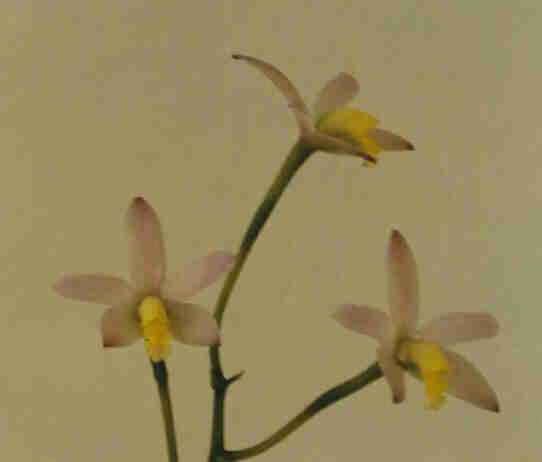


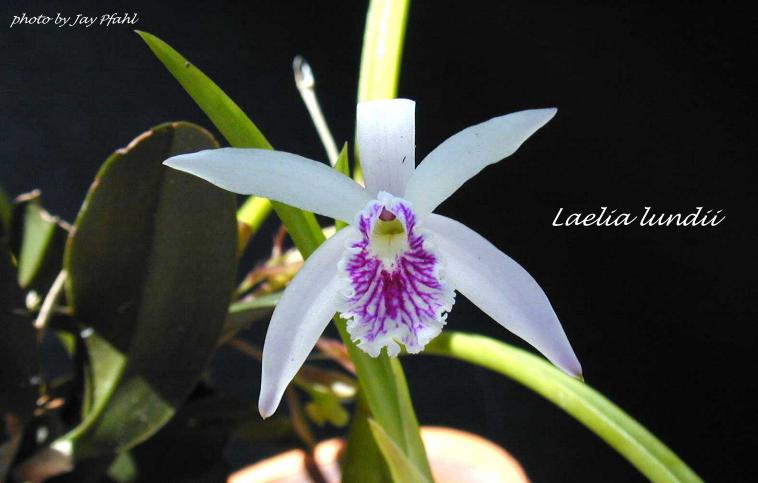
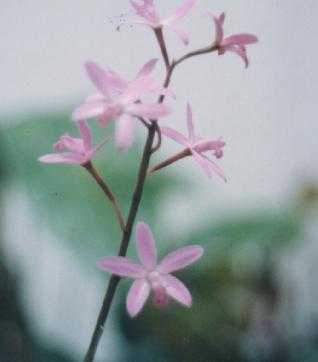

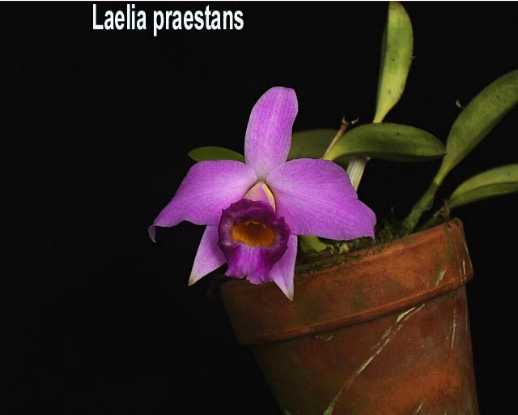
![Laelia pumila [Hooker]Rchb.f](orphotdir/laeliapumila.jpg)
![Laelia pumila [Hooker]Rchb.f var. coerulea](orphotdir/laeliapumilavarcoerulea.gif)


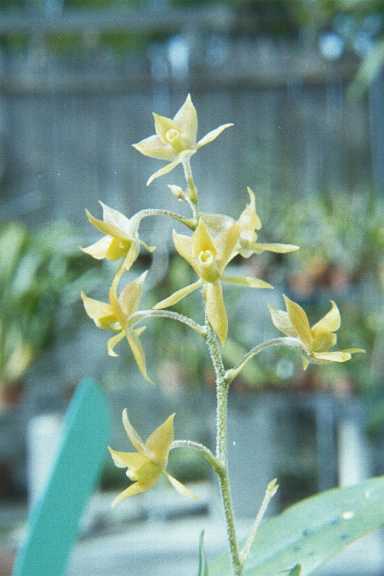

![Lemboglossum cervantesii [La Llave & Lex.] Halbinger](orphotdir/lemcervantesii.jpg)
![Lemboglossum cordatum [Lindley]Halbinger](orphotdir/lemcordatum.jpg)
![Lemboglossum rossii[Lindley]Halbinger](orphotdir/lemrossii.jpg)


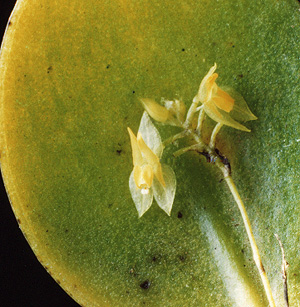
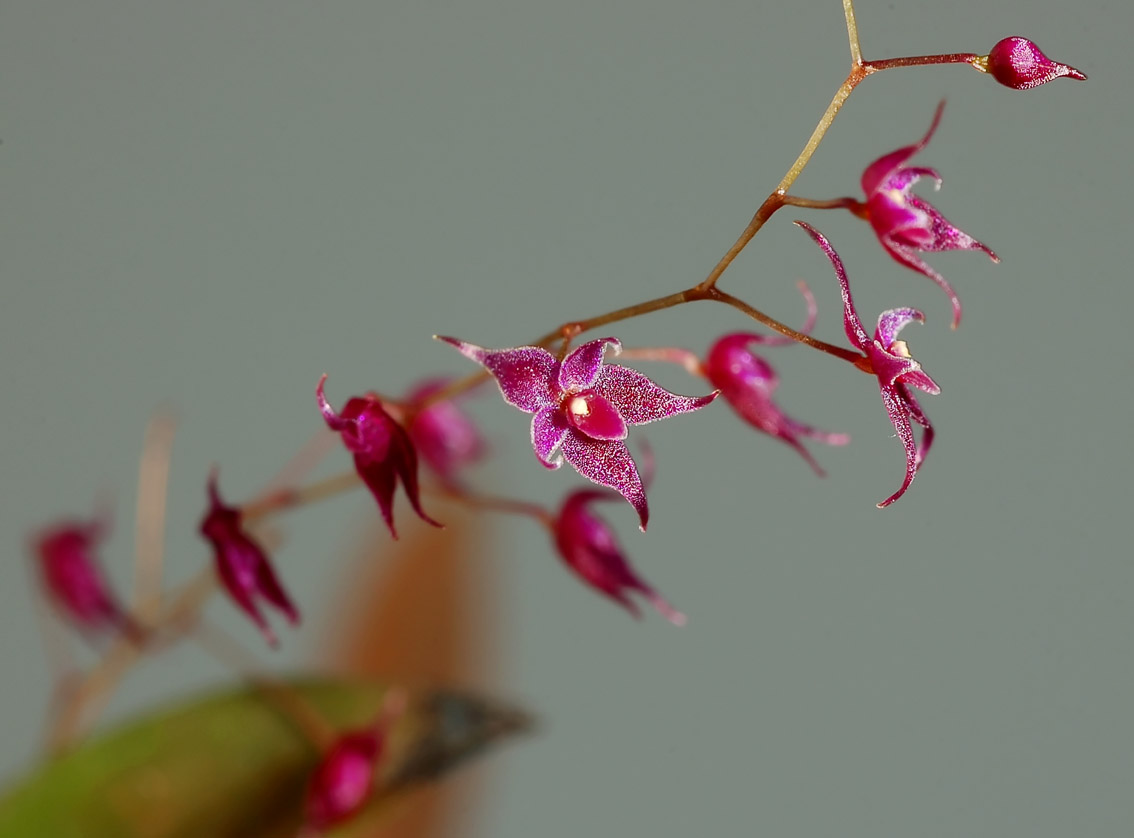


![Liparis latifolia [Blume] Lindl.](orphotdir/liparislatifolia.jpg)


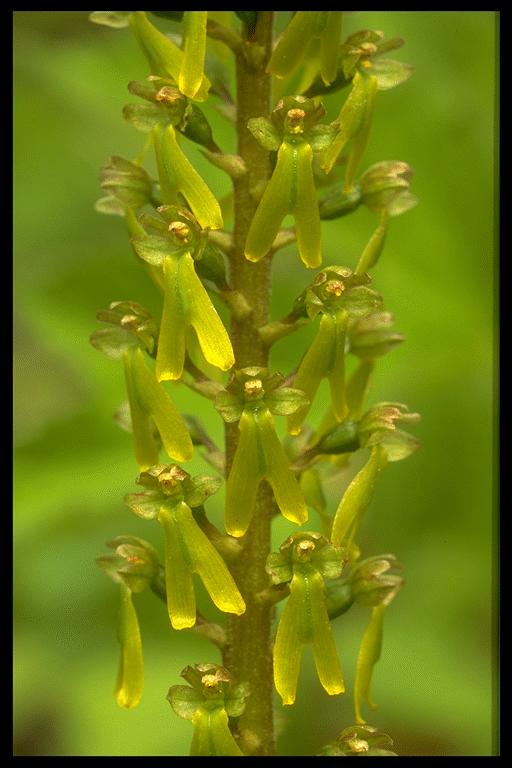


![Ludisia discolor [Ker-Gawl.]A. Rich.](orphotdir/luddiscolor.jpg)
![Lycaste aromatica [Hooker] Lindley](orphotdir/lycastearomatica.jpg)
![Lycaste deppei [Lodd.]Lindley](orphotdir/lycdeppei.jpg)
![Lycaste longipetala [Ruiz & Pavon] Garay](orphotdir/lyclongipetala.gif)

![Lycaste skinneri [Batem. ex Lindley] Lindley](orphotdir/lycvirginal.jpg)